

- Freepik has expanded well beyond stock images in 2026, now offering AI video, multiple generation models, and voiceover tools — but it still lacks a structured production workflow for professional teams.
- LTX Studio is the strongest alternative for teams that need to go from brief to final 4K render in one place, with built-in brand consistency and full IP protection.
- Enterprise teams using LTX Studio report up to 85% faster pre-visualization turnaround and over $120K in savings per project.
Freepik has become much more than a stock library. Today it combines AI image and video generation with a massive asset collection, letting teams generate visuals, edit them, and download them without leaving the platform.
For quick marketing collateral, it covers a lot of ground. But for creative teams building serious video production workflows, there are tools that go further.
This guide covers the strongest Freepik alternatives in 2026, with a focus on what professional and enterprise teams actually need: full creative control, production-quality video output, and tools that fit real pipelines.

What is Freepik
Freepik is a Spanish stock assets platform founded in 2010. It built its audience on a large free tier of photos, vectors, illustrations, and icons.
In 2026, it has grown into something broader: a creative platform combining AI image generation across multiple models (including Flux, GPT Image, and Runway), AI video generation with 4K output, voiceover and lip sync tools, background removal, and image upscaling, all sitting alongside the original stock library.
It works well for generating marketing assets quickly. The limits show when production teams need a structured workflow from script to final render, enterprise-grade IP protection, or a single platform where every creative brief, storyboard, and deliverable stays connected.
Best Freepik Alternatives
1. LTX Studio
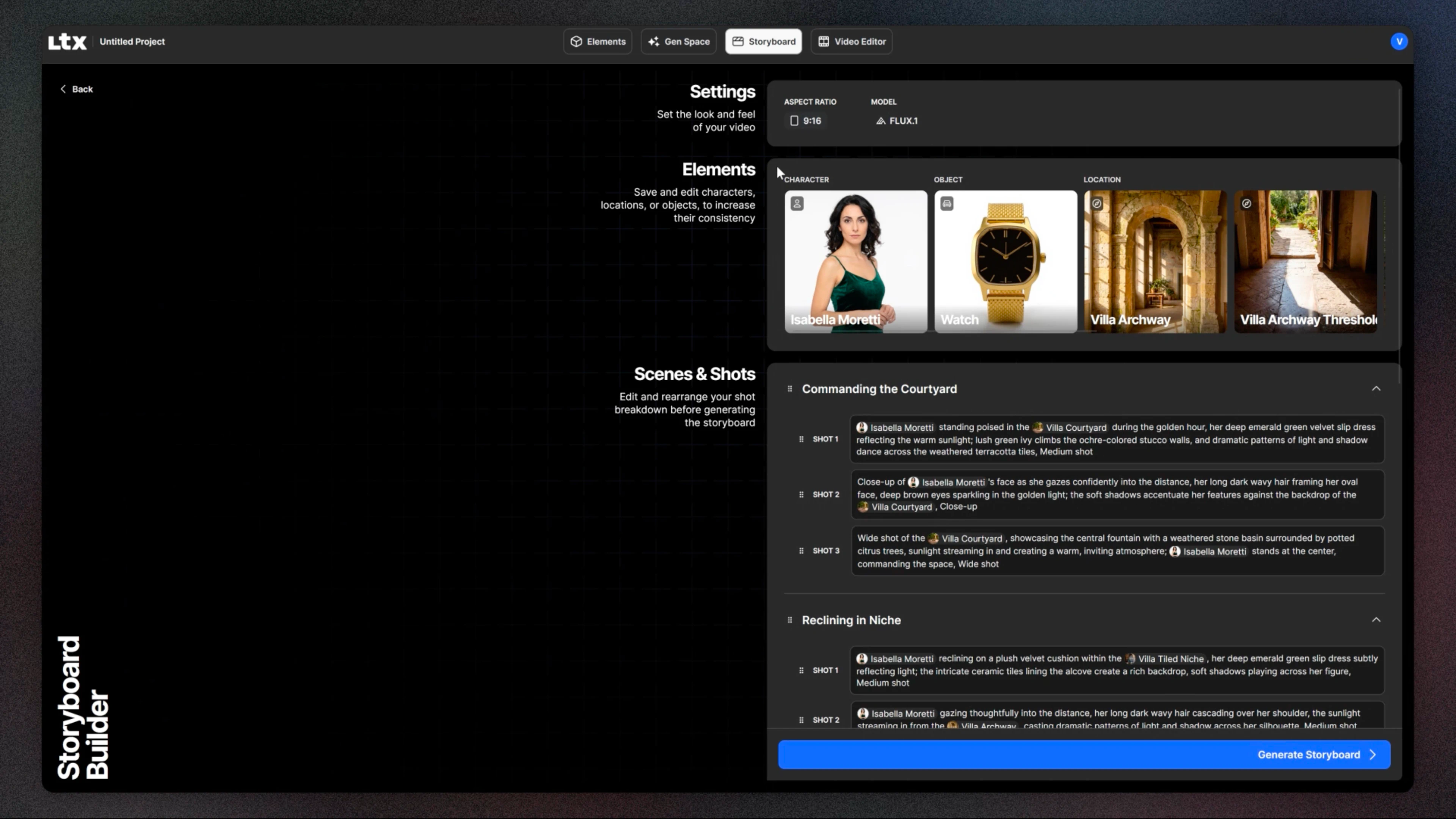
LTX Studio is the complete creative suite for AI video production. Where Freepik gives you a collection of generation tools and assets, LTX Studio gives you a structured production workspace: from script and storyboard all the way to final 4K render, without stitching together separate tools.
The platform handles the full production loop. Input text, reference images, or audio and get production-ready video with native 4K resolution and synchronized audio.
The Storyboard Generator turns scripts into shot-by-shot visuals fast, and every Project keeps its storyboard, timeline, and pitch deck connected inside a single workspace, so nothing gets lost across folders or tools.
Brand consistency is built in. Teams working inside the LTX Studio platform can apply custom fine-tuning so a brand's visual identity carries through every generated asset in a campaign.
You're not searching for footage that's "close enough" and then clearing licensing. You generate exactly what the brief calls for, at the style the brand requires.
The proof points are specific. Production studios report up to 85% faster turnaround on pre-visualization work and over $120K in savings per project. Those numbers come from real pipelines, not controlled demos.
2. Adobe Firefly
Adobe Firefly integrates AI image and vector generation into Creative Cloud, sitting inside tools like Photoshop, Illustrator, and Premiere Pro. For teams already embedded in the Adobe suite, it offers a low-friction entry point.
The limitation is scope: Firefly is primarily image-focused and tied to Adobe's tools, which makes it less useful for teams that need standalone video generation or work outside the Creative Cloud suite.
3. Canva
Canva added AI image generation, background removal, and text-to-image features on top of its drag-and-drop design platform. It's a solid choice for quick social graphics, pitch decks, and simple marketing assets.
For professional video production or brand consistency at enterprise scale, it wasn't built for that use case.
4. Midjourney
Midjourney produces high-quality AI images with a style that's become recognizable across the creative industry. Concept work, mood boards, and visual inspiration are where it excels.
It doesn't generate video, doesn't offer direct workflow integrations, and its Discord-based interface keeps it outside most professional production pipelines.
5. Runway
Runway offers text-to-video and image-to-video generation with a consumer-friendly interface and has been improving steadily.
Enterprise teams comparing it against LTX Studio typically focus on output fidelity at 4K, generation speed, and depth of pipeline integration.
Why Enterprise Teams Should Use LTX Studio
Stock asset platforms and general-purpose generation tools weren't built for enterprise production. Volume is too high, brand standards are too strict, and IP risk is too real. A different category of tool is needed.
LTX Studio was built for exactly this. Here's what separates it for enterprise buyers in 2026.
One platform from concept to delivery. Brief, storyboard, script, final render. Everything lives in LTX Studio. No five-tool stack to maintain, no version control chaos across shared folders.
Creative teams spend less time on tooling and more time on the actual work.
Output that meets broadcast and digital standards. Native 4K with synchronized audio. Videos coming out of LTX Studio go straight into review workflows. There's no cleanup-before-delivery step.
Full IP protection. LTX Studio runs 100% locally on consumer-grade hardware. Assets, prompts, and proprietary workflows never leave the machine.
For enterprise teams handling client IP or working in regulated industries, that's not a nice-to-have. It's the difference between a tool the legal team approves and one they block.
.png)
Cost efficiency at scale. Local deployment removes cloud compute costs entirely. API pricing is per-second for teams that prefer cloud routing. At production volume, the cost math shifts fast.
Validated at production scale. Nvidia showcased LTX Studio at CES 2026. Production studios have documented their results on the LTX Studio blog, with teams reporting consistent 85% reductions in pre-visualization timelines.
Enterprise teams aren't piloting it. They're building pipelines on it.


Maximize your creative potential with AI-powered tools
Maximize your creative potential with AI-powered tools





.png)

.webp)
.png)