

- Recover lost detail in highlights and shadows
- No manual editing or grading required
- Output ready for professional post-production workflows
LTX Studio's SDR to HDR automatically converts any SDR video into true HDR — recovering lost detail, expanding dynamic range, and delivering output ready for professional workflows. No reshooting. No manual grading.
What Is SDR?
SDR, or Standard Dynamic Range, is the traditional format used for most video today. It supports a limited range of brightness and color, which means images can look flat, with less detail in very bright or very dark areas.
What Is HDR?
HDR, or High Dynamic Range, is a more advanced format. It captures a wider range of light and color, allowing for brighter highlights, deeper shadows, and more detailed, realistic images. HDR content looks closer to how we see the real world, especially on modern screens that support it.
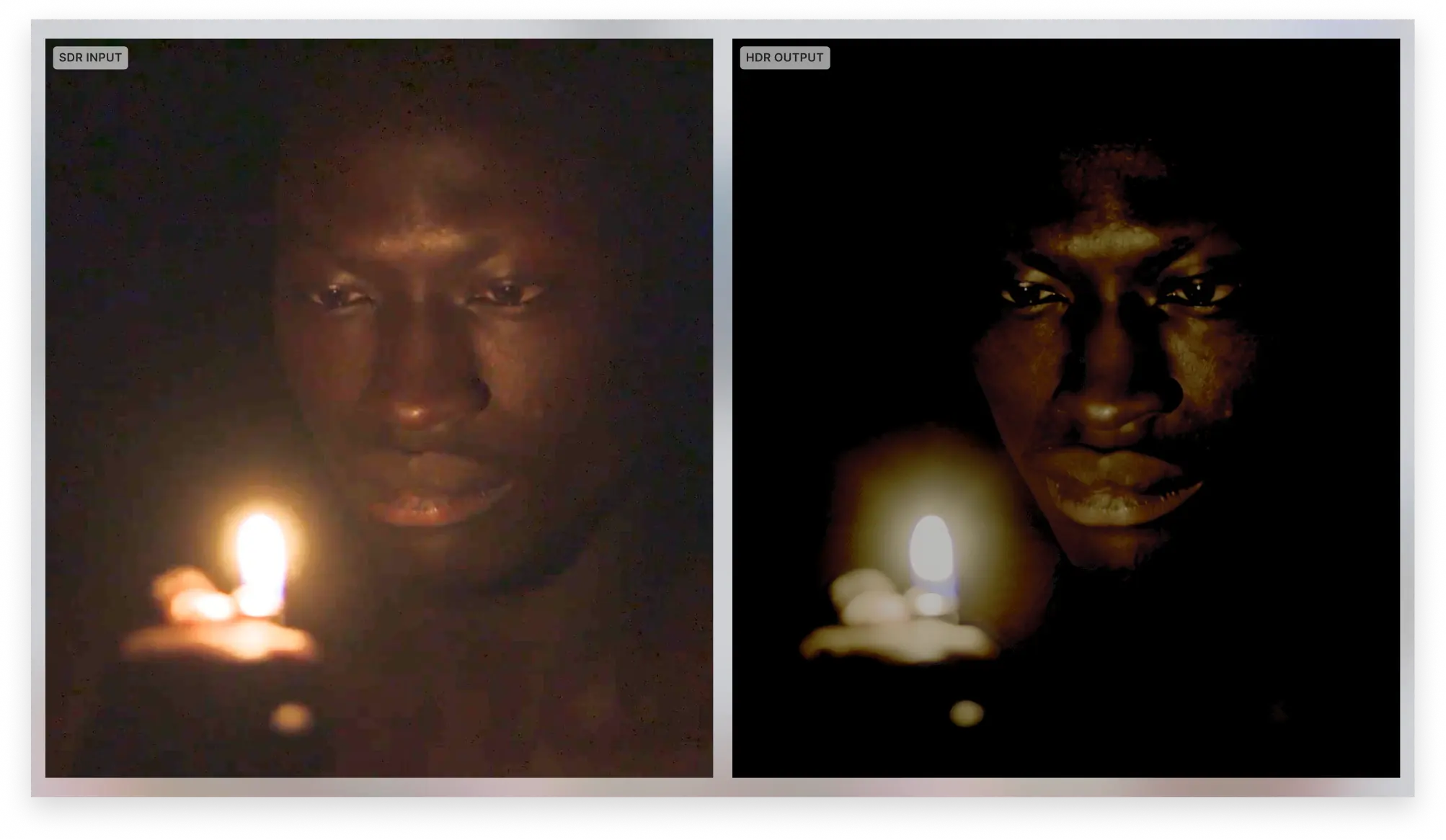
The Problem with SDR Video
Most video today, especially AI generated content, is still created in SDR. While it is widely supported, it comes with clear limitations.
Bright areas often clip and lose important detail. Shadows collapse into flat or completely black areas. When you try to edit or push the image, it quickly breaks.
This limits both the quality of the final result and the flexibility you have in post production.
Introducing SDR to HDR in LTX Studio
SDR to HDR is a new video capability in LTX Studio that automatically turns SDR video into true HDR.
It enhances brightness, contrast, and color depth to create a more vivid and lifelike result, without any manual editing.
What LTX Built
This is not just a visual adjustment. It is a reconstruction of the image.
SDR to HDR processes video with a wider dynamic range, restoring information that was lost in the original SDR format. Instead of stretching existing values, the model rebuilds the missing light data.
The result is footage that holds up in editing, grading, and delivery.
How It Works
The model reconstructs the dynamic range that was lost in SDR and adds back light information that was not preserved.
Highlights regain detail instead of appearing clipped. Shadows reveal depth instead of looking flat. The image becomes more flexible and more natural to work with.
The output is a scene linear EXR file, float16 with about 20 bit effective range, ready to use in professional editing tools.
Viewing the Output
Once the SDR to HDR process is complete, you can easily review the results inside LTX Studio.
Click on the Tools button on the right and select “View Frames.” This opens a dedicated preview screen for HDR frames.
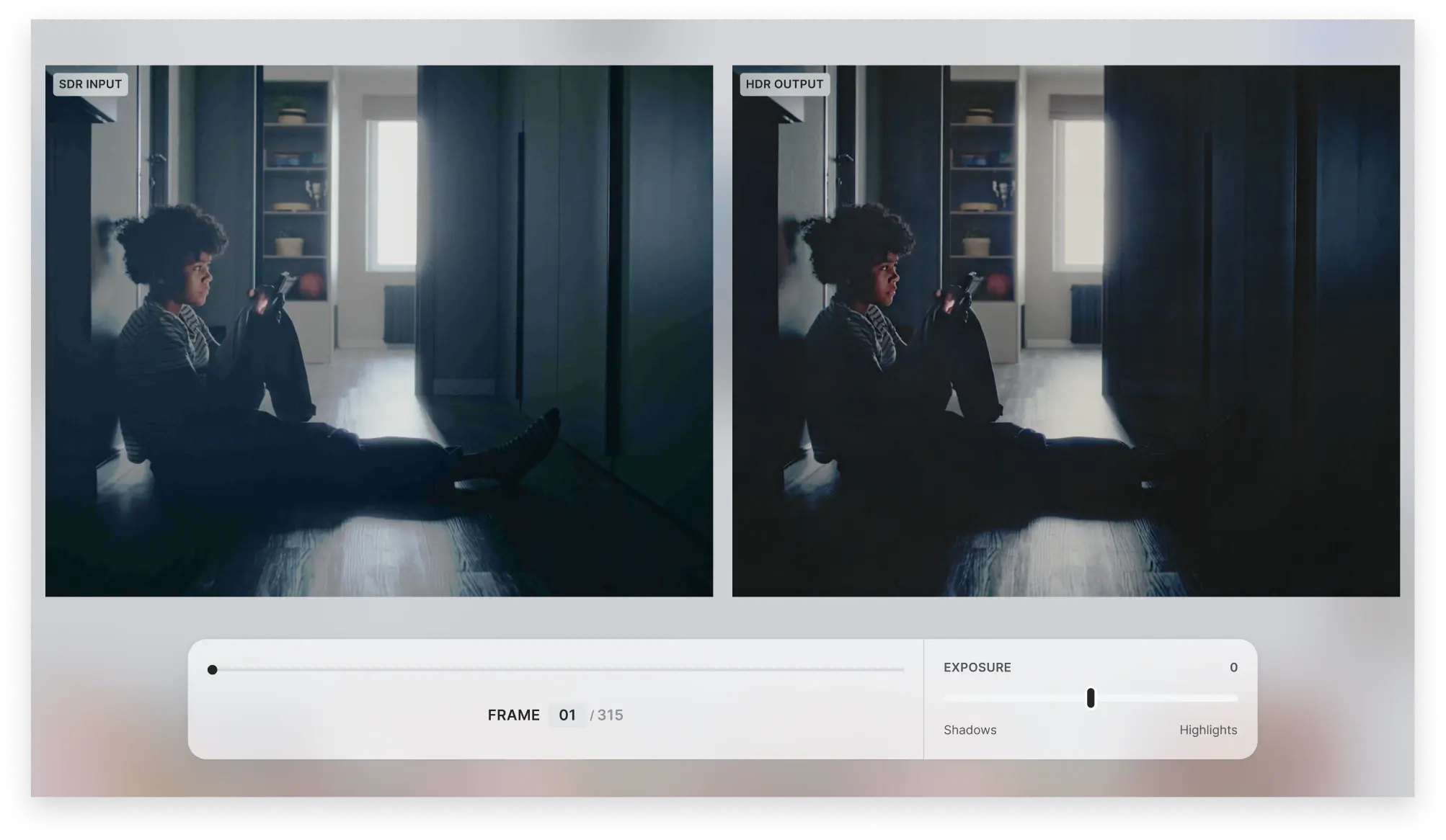
The interface displays a side-by-side comparison: the original SDR frame on one side and the processed HDR version on the other. This makes it easy to see the improvement in dynamic range, detail, and color.
At the bottom of the screen, a timeline lets you scrub through the video and select specific frames to inspect more closely.
You can also use the exposure slider at the end of the timeline to adjust brightness and better evaluate highlight and shadow detail across the scene.
Why It Matters
SDR to HDR improves overall video quality with brighter highlights, deeper shadows, and richer colors. It reveals more detail in both dark and bright areas and creates a more immersive viewing experience.
It also removes the need for reshooting or complex manual workflows. Existing SDR content can be upgraded to meet modern HDR standards quickly and efficiently.
Who It Is For
SDR to HDR is designed for teams and creators who need high quality video without adding complexity.
- Marketing and creative teams can produce more engaging content for modern platforms.
- Teams managing large video libraries can upgrade existing assets at scale.
- Post production workflows gain more flexibility for grading and finishing.
- Creators working with AI generated video can improve depth, realism, and overall quality.
A Better Starting Point for Every Video
With SDR to HDR, your footage is no longer limited by its original format. No reshooting. No complex workflows. More detail, more range, more flexibility from the first frame.
What does SDR to HDR actually do to my video?
It reconstructs the dynamic range lost in SDR encoding — recovering highlight and shadow detail that standard 8-bit formats compress away. The output is a scene-linear EXR file with approximately 20-bit effective range, giving you a richer, more detailed image that's ready for professional grading tools and modern HDR displays.
Can I use this on existing video assets, or only on content I generate in LTX Studio?
Both. SDR to HDR works on existing SDR footage - including older assets in your library, footage generated by other tools, or content originally shot in SDR. You do not need to regenerate or reshoot anything.
Do I need a special display to see the difference?
To see the full HDR output visually, you'll need an HDR-supported display. However, the scene-linear EXR output is useful in any professional post-production context - your colorist or grade can work with a wider data range regardless of what you're monitoring during editing.


Maximize your creative potential with AI-powered tools
Maximize your creative potential with AI-powered tools






.png)