
- AI sped up content creation, but expectations scaled even faster — teams are now producing 3-5x more with the same headcount and budget.
- The real bottleneck isn't talent or effort — it's workflows built for a slower, linear era that can't handle today's volume and pace.
- Tool-switching, scattered feedback, and poor stakeholder visibility lead to 5-7 revision rounds per project, with 60% of changes caused by misaligned expectations.
- Late-stage changes cost 10-100x more than early ones — and they're not bad luck, they're a symptom of stakeholders approving what they can't fully see.
- When teams are stretched thin, brand integrity suffers — safe choices replace bold ideas, and distinctive work gets lost to shortcuts.
- The fix isn't more tools or longer hours — it's rebuilding workflows so exploration, alignment, and iteration happen continuously, not sequentially.
Creative teams have never had access to more tools. Design platforms, AI generators, collaboration software, project management systems, feedback tools—the list goes on. And yet, despite all this technology and all the late nights, something strange is happening.
Teams are shipping less while working harder.
Welcome to the creative efficiency paradox.
The New Math of Creative Production
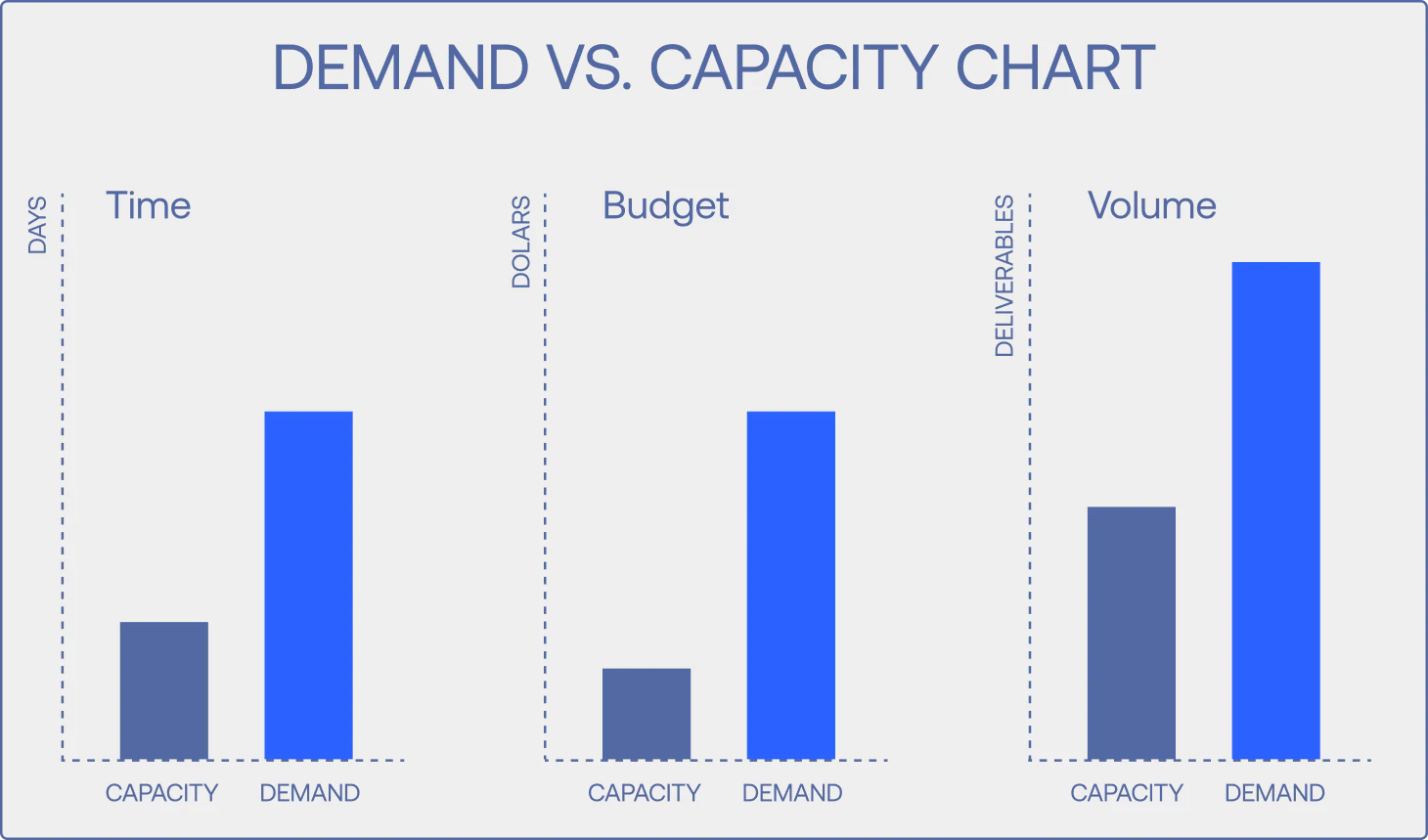
AI has fundamentally changed the game. It's made production faster, opened up new creative possibilities, and lowered technical barriers to entry. A social video that used to take three days can now be roughed out in hours. Animation that required a specialist can be prototyped by a generalist.
But here's what AI hasn't changed: budgets and timelines.
Marketing teams that once managed 3-4 major campaigns per quarter are now juggling 10-15. Brand studios that delivered a few hero videos are now producing daily social content, animation assets, performance ads, and platform-specific variations—all simultaneously.
AI accelerated creation, but expectations scaled far faster than resources. Teams are being asked to deliver significantly more output—with the same headcount, the same budget, and workflows designed for a slower era.
Why Working Harder Isn't Working
Creative teams aren't moving slower because they're less talented or less committed. They're drowning in process.
Consider what "drowning in process" actually looks like on a Tuesday afternoon:
A creative director is in their fourth tool-switching session of the day. They started in Miro for the brainstorm, moved to Figma for mockups, jumped to Google Slides to build the stakeholder deck, then back to Slack to coordinate feedback. Now they're in Frame.io trying to consolidate comments from three different departments who all saw different versions of the concept.
Meanwhile, the team is waiting on approvals that are stuck because stakeholders can't visualize what they're approving from a static deck. So they ask safe questions. Request conservative changes. And schedule another review meeting "just to be sure."
This isn't a people problem. It's a systems problem.
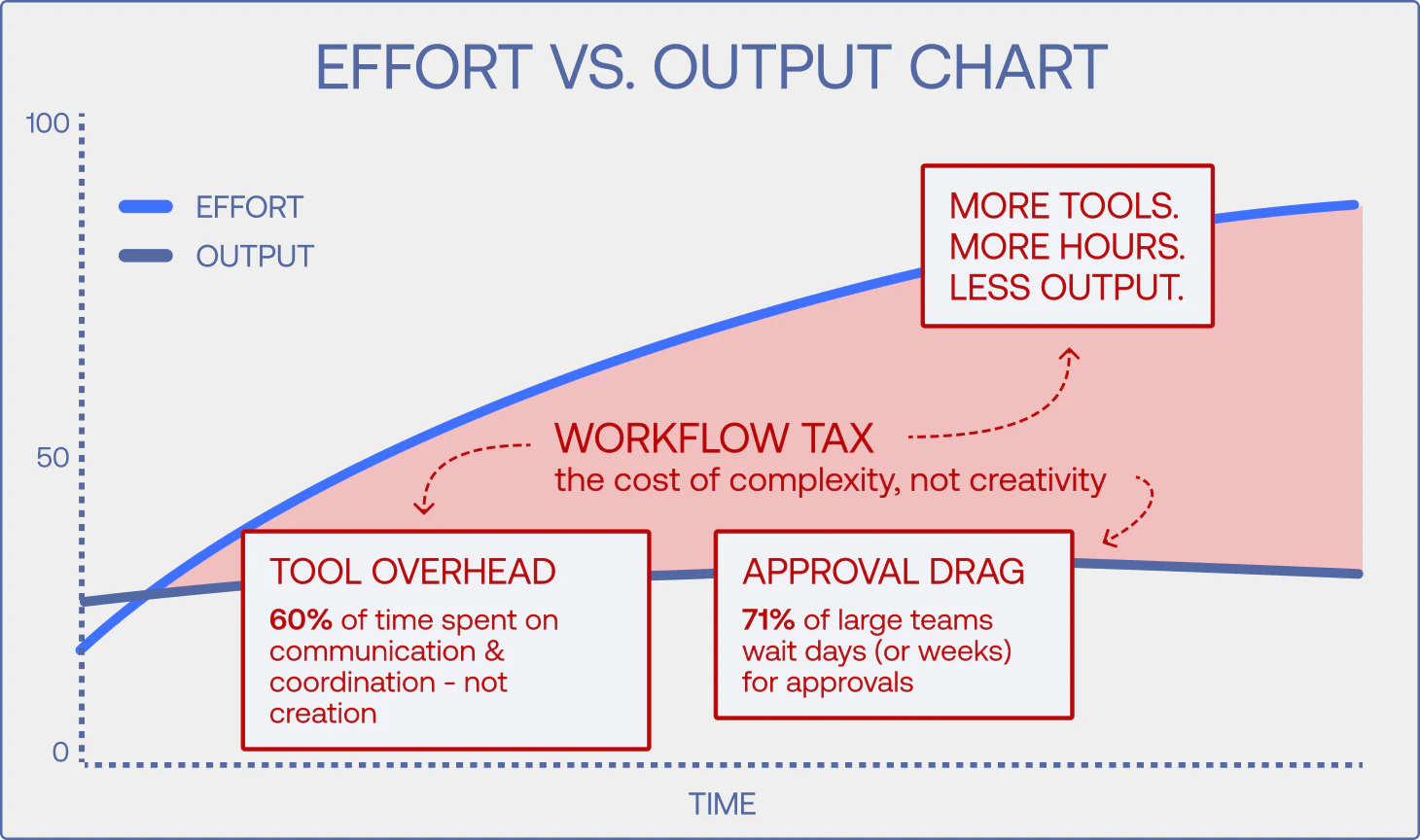
Every project now requires juggling multiple tools, coordinating work across disconnected platforms, and managing an ever-growing volume of requests. The average creative project goes through 5-7 rounds of revisions before approval, with 60% of changes stemming from misaligned expectations. Each round involves multiple stakeholders, scattered feedback, and rework that compounds with every iteration.
The bottleneck isn't how fast teams can execute. It's that workflows weren't designed for this volume, this pace, or this level of coordination complexity.
Three Ways the Paradox Manifests
When Scale Forces Brand Compromises
When teams are stretched thin, they don't take creative risks—they take shortcuts. And shortcuts almost always mean less distinctive work.
When you're juggling too many deliverables with too few resources, brand integrity suffers. Teams default to templates because custom work takes too long. They choose safe concepts because bold ideas require more rounds of stakeholder convincing. Last-minute compromises bypass brand reviews because there's no time left to do it properly.
And suddenly, the campaign that started with a distinctive vision ends up looking like everything else in the market. Not because the team lacked creativity—because the workflow couldn't support anything ambitious at that velocity.
When Late Changes Become Exponentially Expensive
Every creative knows this truth: the later a change happens, the more expensive it becomes.
A tweak to the script in pre-production? Minor adjustment. The same change after the shoot? Now you're looking at reshoots, re-edits, voice-over rework, legal reviews, and delivery delays that cascade across your entire timeline.
Changes made in post-production cost 10x to 100x more than changes made during concept development.
But here's the part most teams miss: those late changes aren't random bad luck. They're a symptom of visibility failure.
Stakeholders can't confidently approve what they can't see. When alignment happens through decks and mood boards—abstract formats that leave too much open to interpretation—everyone imagines something different. Creative teams spend their time defending concepts instead of refining them. And by the time everyone actually sees the same thing, production is already underway and changes are expensive.
The problem isn't that stakeholders change their minds. The problem is they never had enough clarity to make confident decisions in the first place.
Is Your Team Stuck in the Paradox?
If this all sounds familiar, here are three signs your workflow might be the real bottleneck:
Are you spending most of your time on revisions rather than creation? If the majority of project hours go to fixes and refinements rather than exploration and building, that points to a workflow issue.
Do stakeholders keep shifting direction in later rounds? If feedback in round 5 contradicts earlier rounds, you likely have a visibility gap—people aren't seeing the same thing at the same time.
Does every project feel like it starts from scratch? If insights from one campaign don't naturally carry forward to the next, fragmentation is costing you momentum.
Even one yes suggests your workflows aren't keeping pace with your output demands.
What's Actually Changing
Here's what's important to understand: this paradox isn't permanent.
The teams starting to break out of it aren't just working harder or adding headcount. They're recognizing that AI didn't just accelerate production—it exposed how fundamentally sequential and linear traditional creative workflows actually are.
Pre-AI workflows were designed around distinct phases: concept, then deck, then approval, then production, then feedback, then revision. Each phase had clear handoffs. That model worked when timelines were measured in weeks and output was measured in single deliverables.
But when you're expected to produce daily, when formats multiply, when iteration needs to happen continuously rather than at the end—linear doesn't work anymore.
What's emerging is a different model entirely: workflows where exploration, alignment, and iteration happen continuously throughout production, not at rigid checkpoints. Where teams work visually from the start so stakeholders can see what they're approving, not imagine it. Where creation and collaboration happen in connected environments rather than across fragmented tools.
This isn't about using AI to create faster. It's about rebuilding how content gets made when scale and quality are both non-negotiable.
The shift is already happening. The question is whether your workflows are evolving with it.
The Path Forward
The creative industry's efficiency problem isn't about needing better talent or more resources. It's about workflows designed for a different era trying to handle AI-era demands.
More effort alone won't solve this. Neither will better talent, longer hours, or adding yet another project management tool to the stack.
But understanding the paradox—recognizing that this is a structural problem, not a people problem—is the first step toward working smarter instead of just harder.
The paradox isn't going away. But the workflows that perpetuate it can.
{{blog-banner-static02}}


Maximize your creative potential with AI-powered tools
Maximize your creative potential with AI-powered tools





.png)
.png)